
Crimes of Fashion
Fashion Doesn’t Lie. People Do.
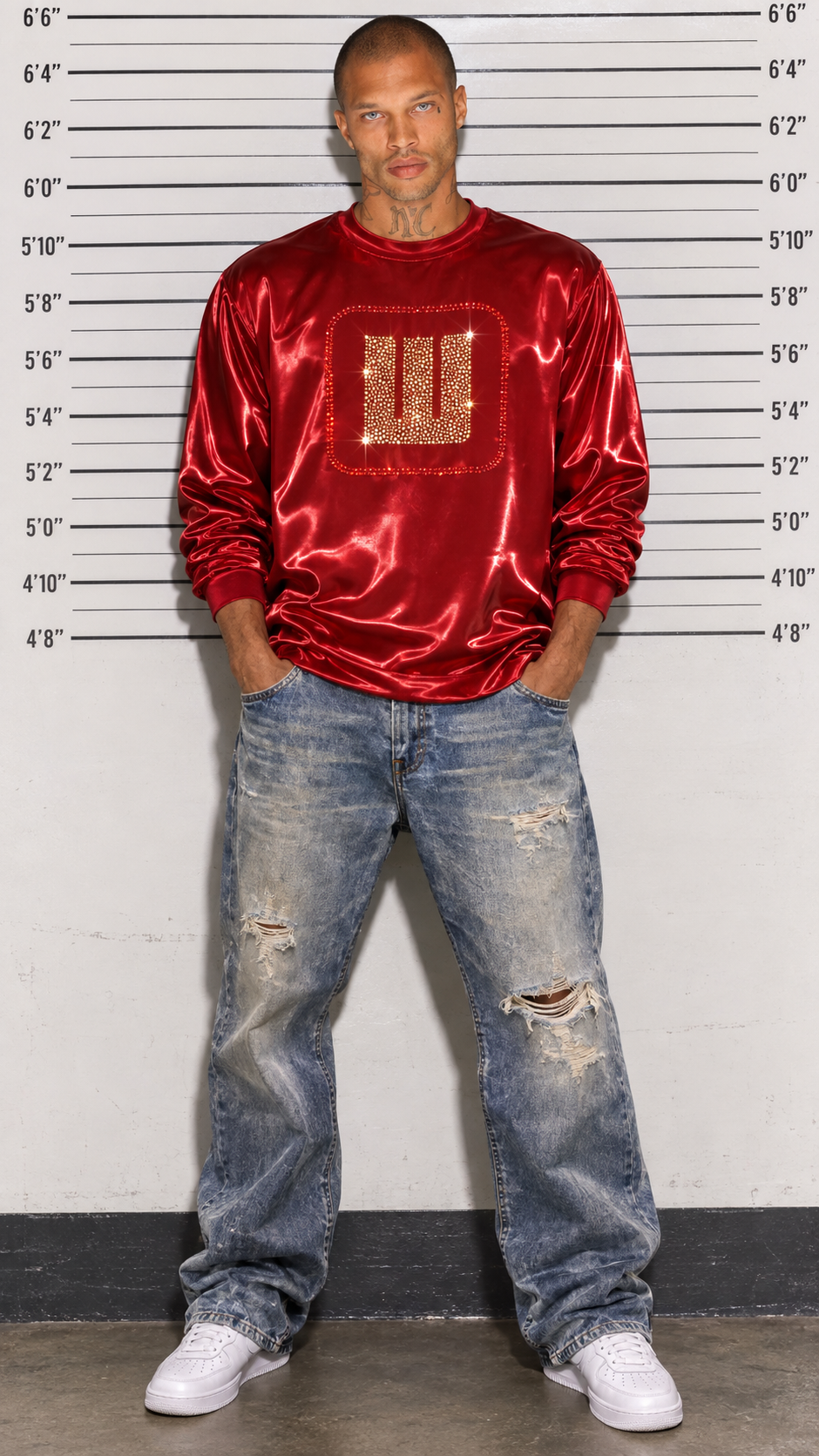
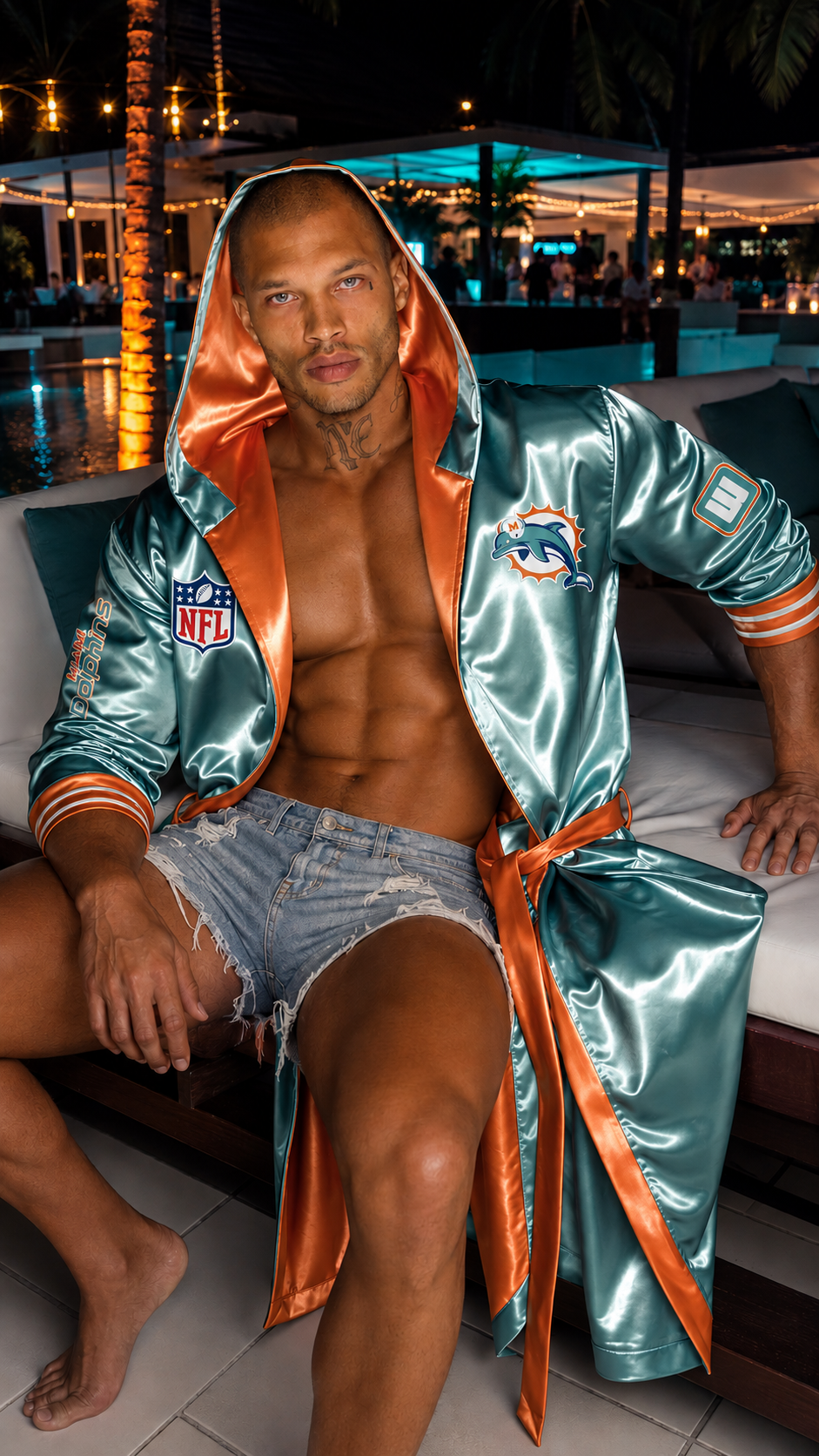
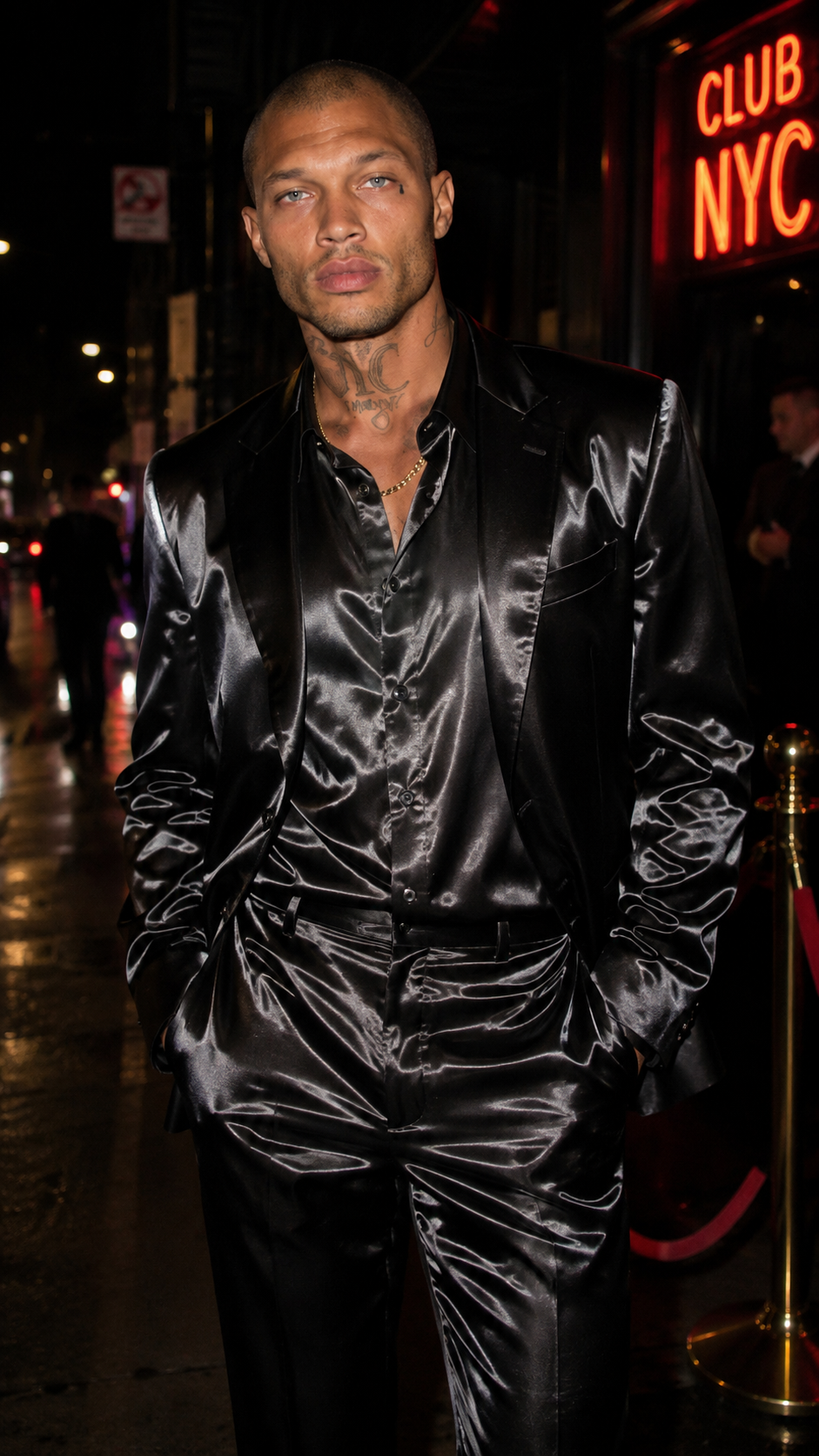
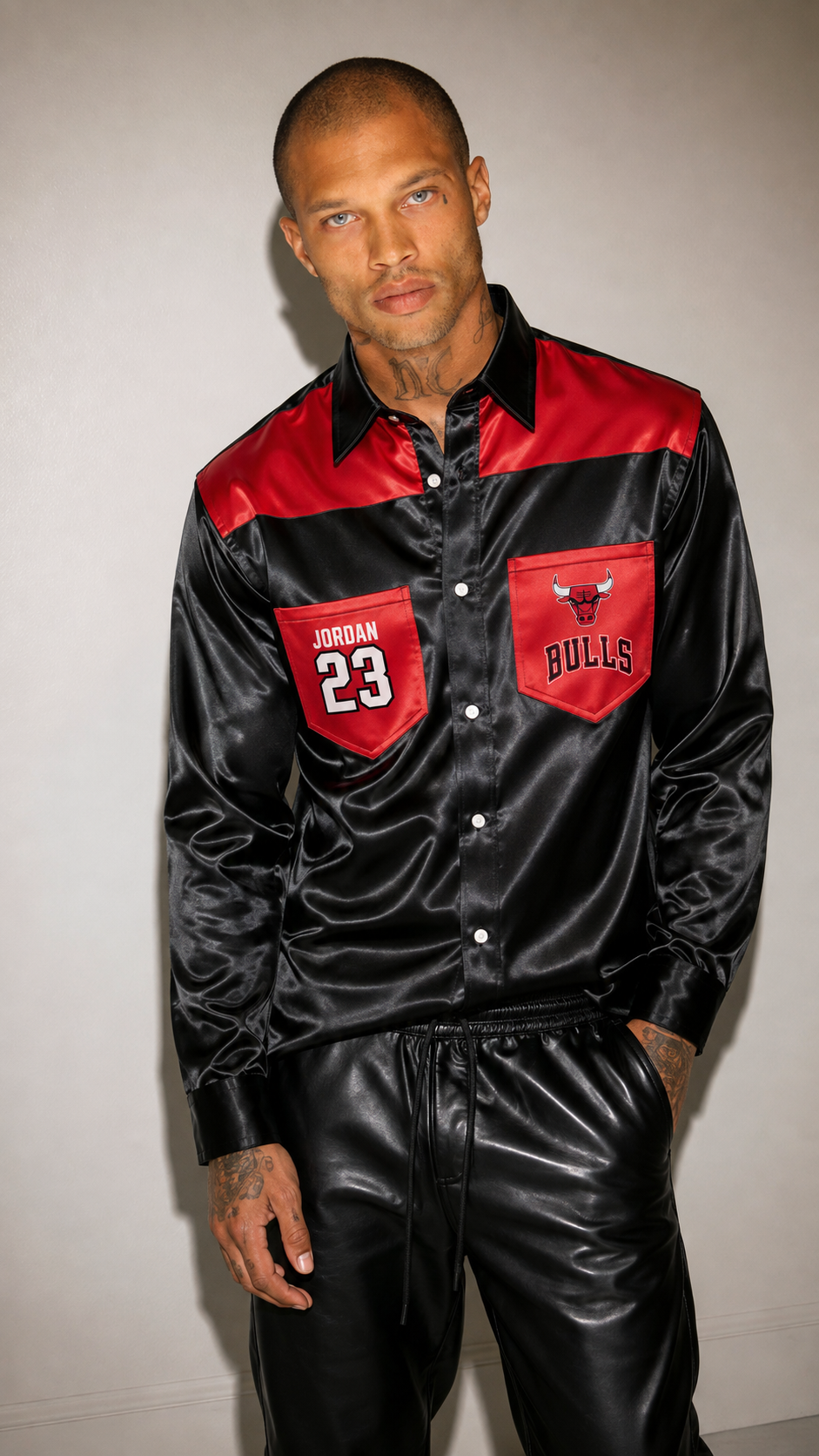
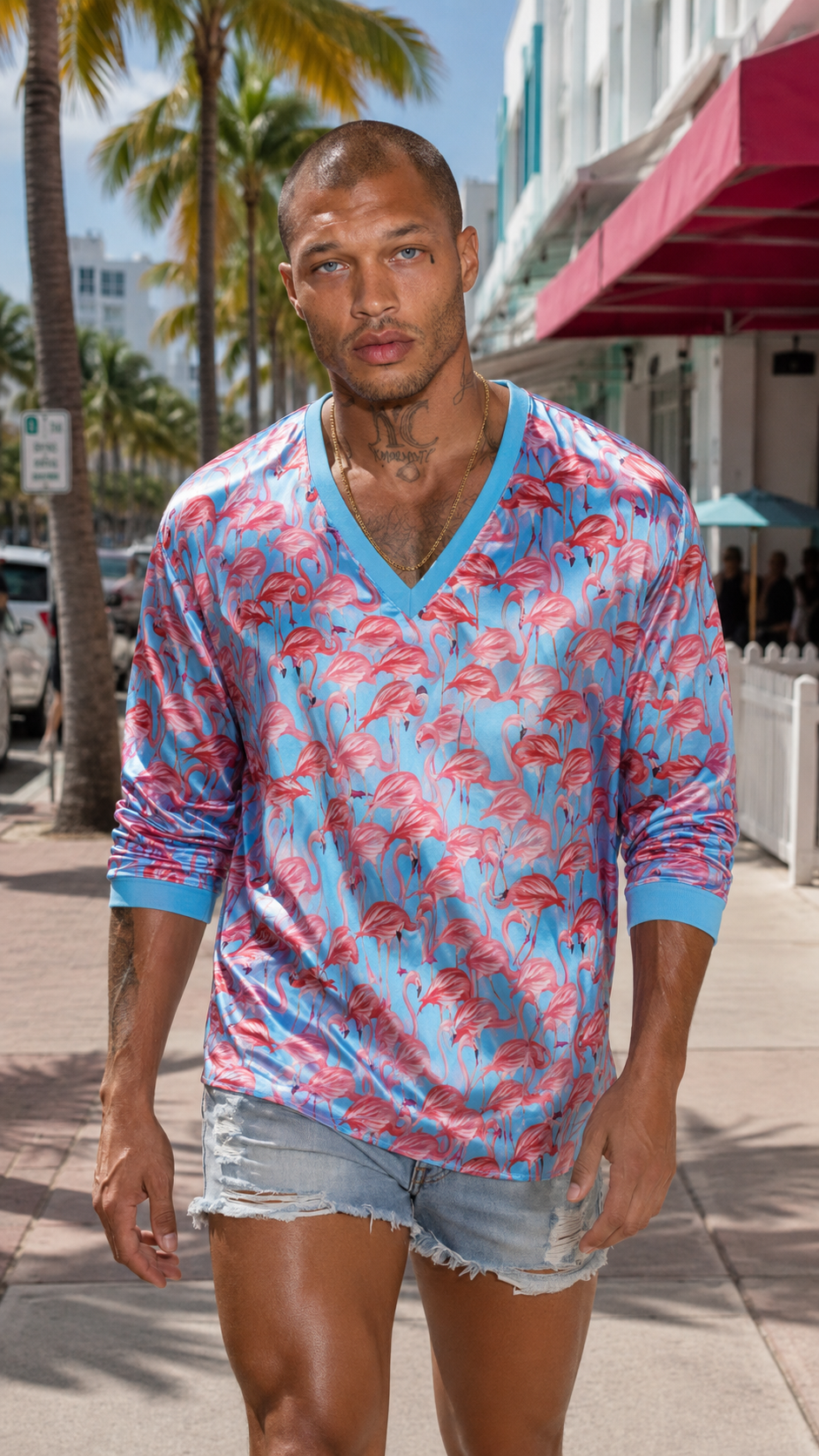
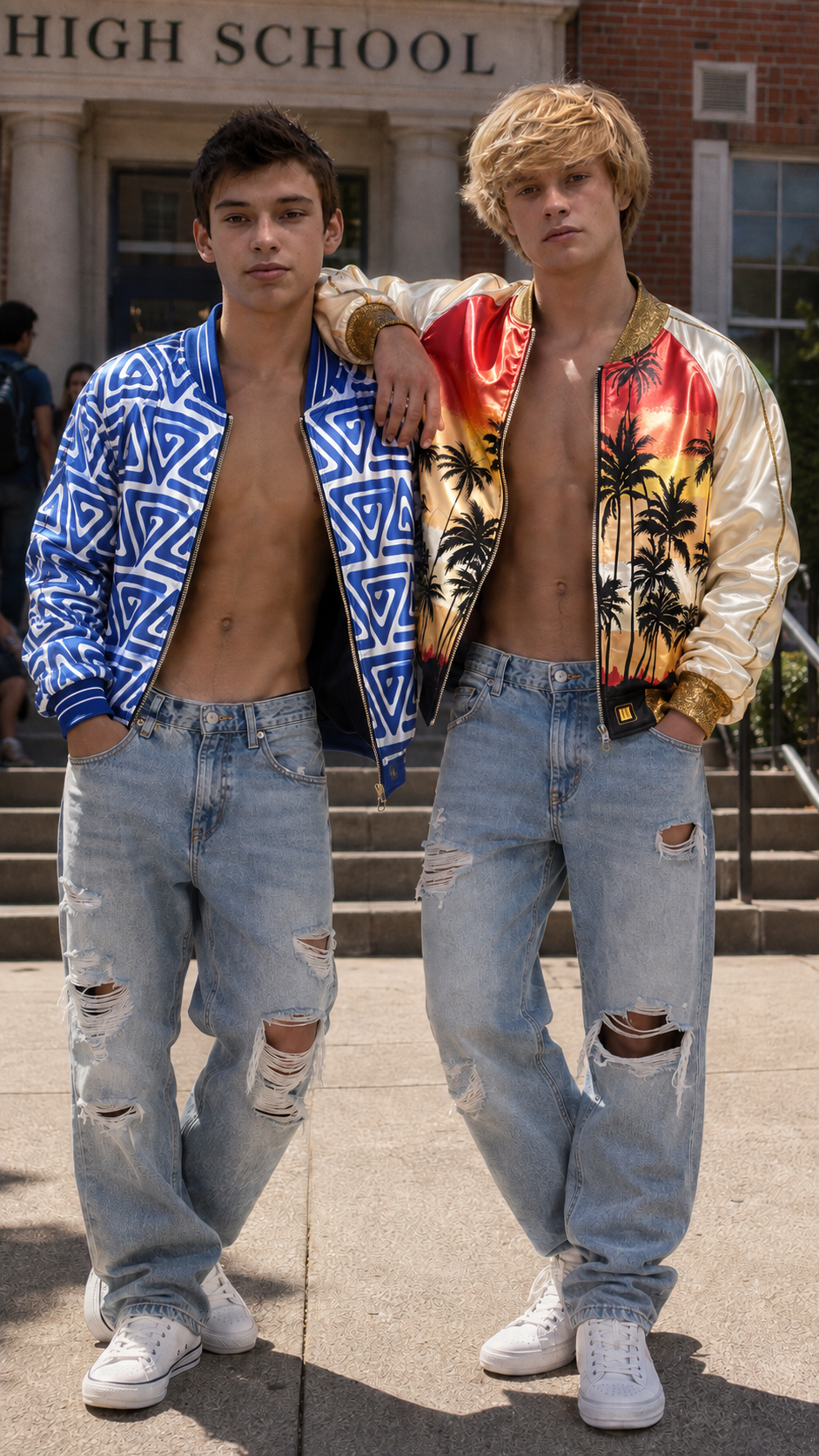
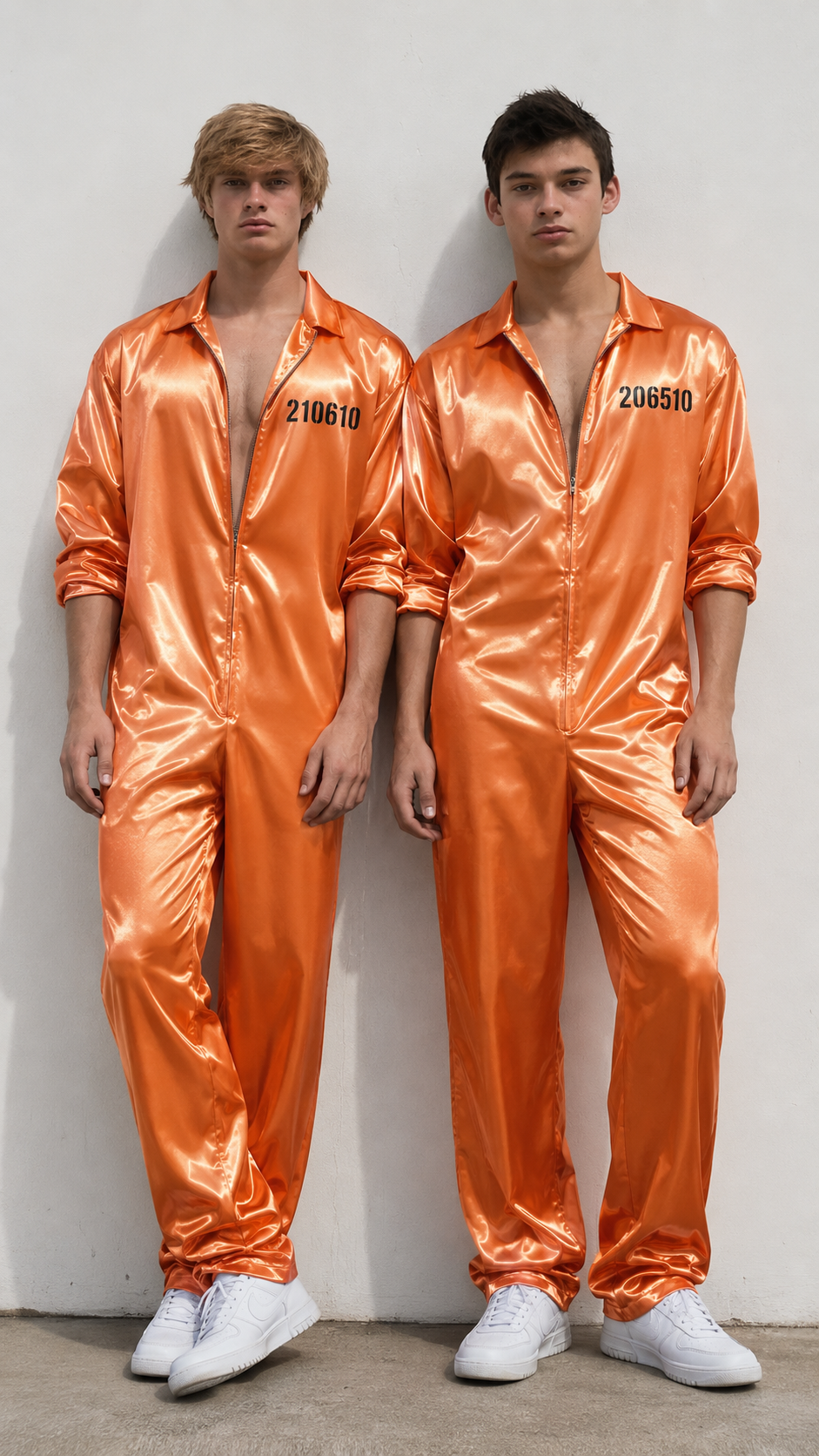
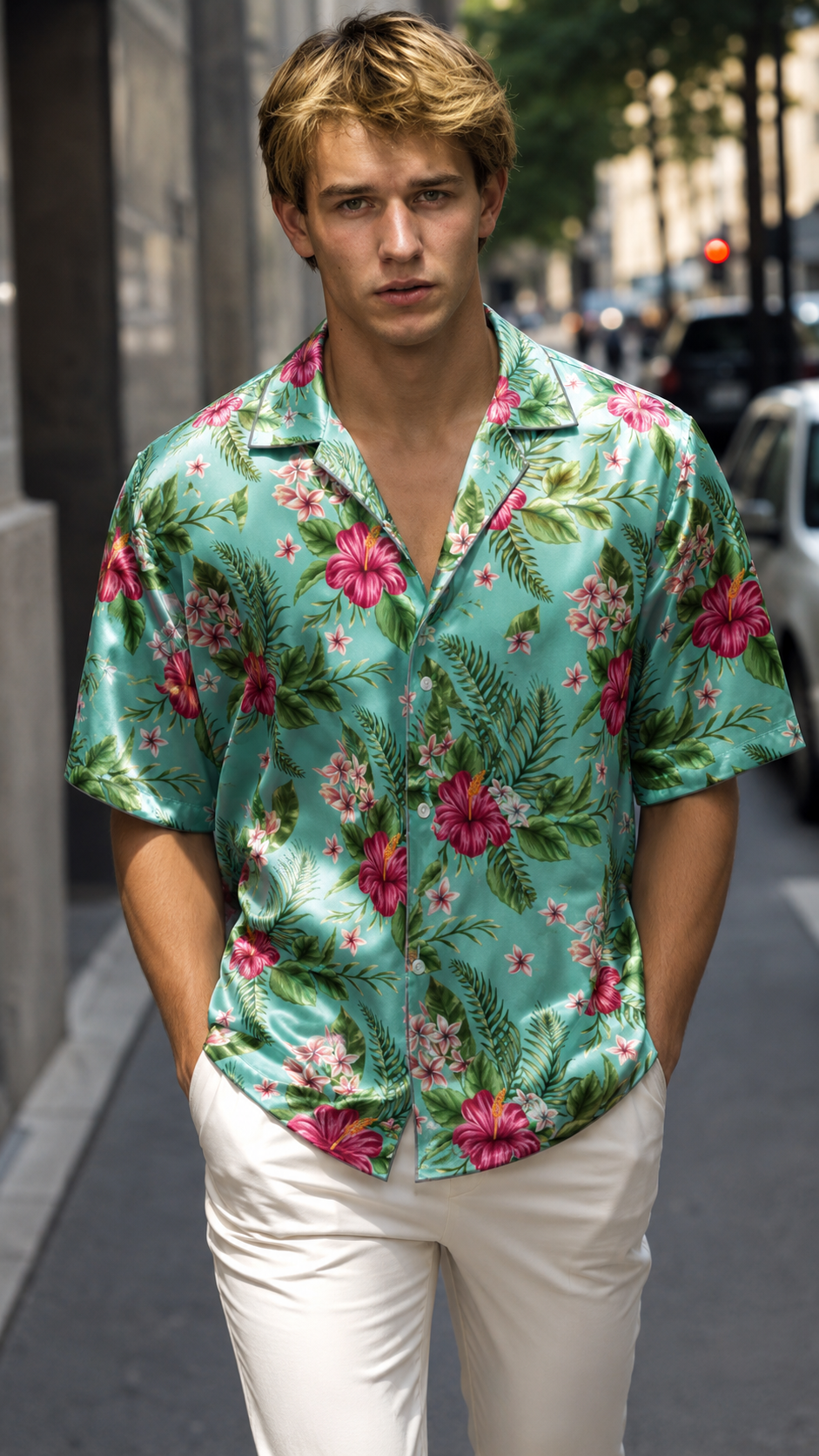
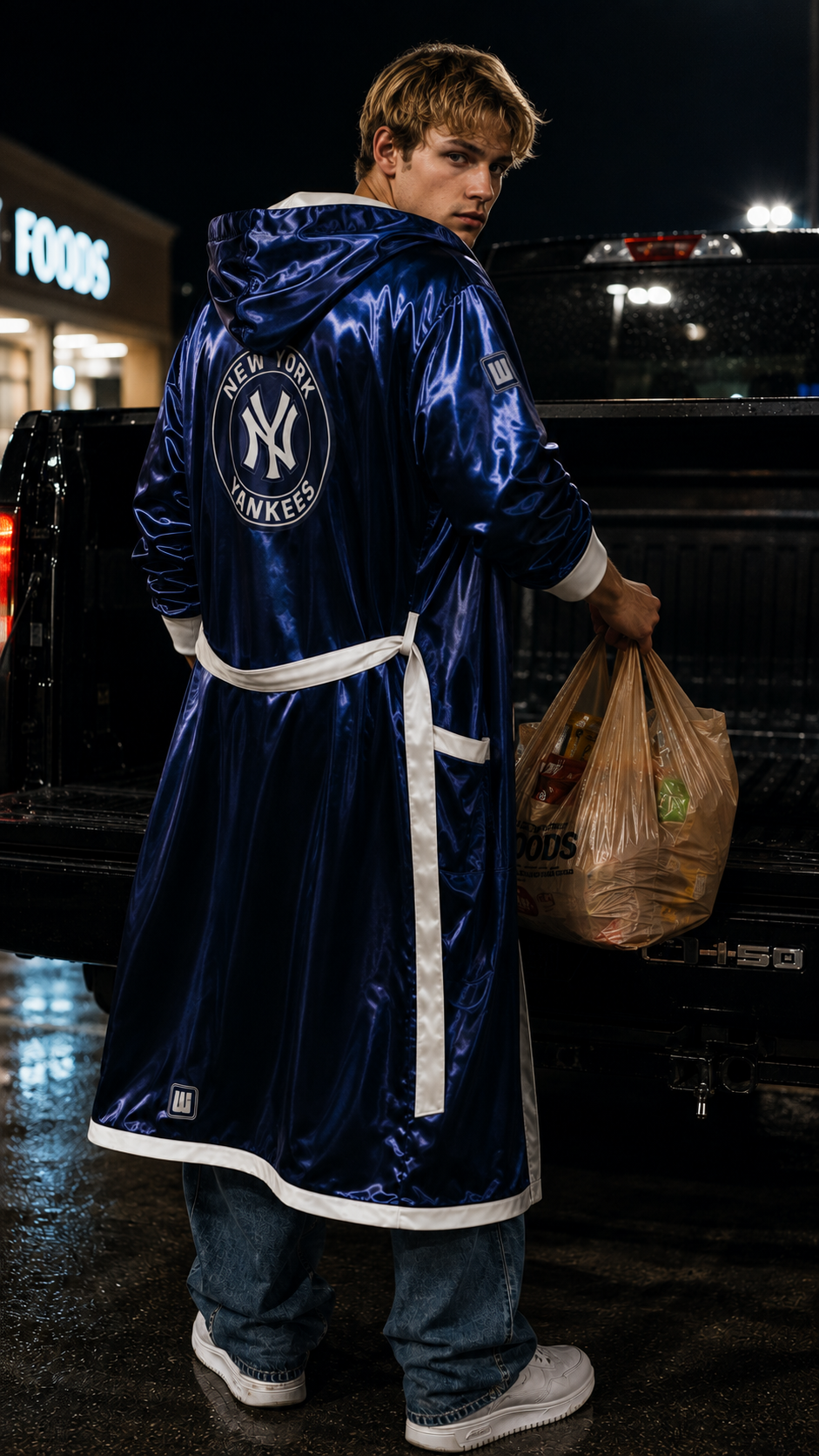
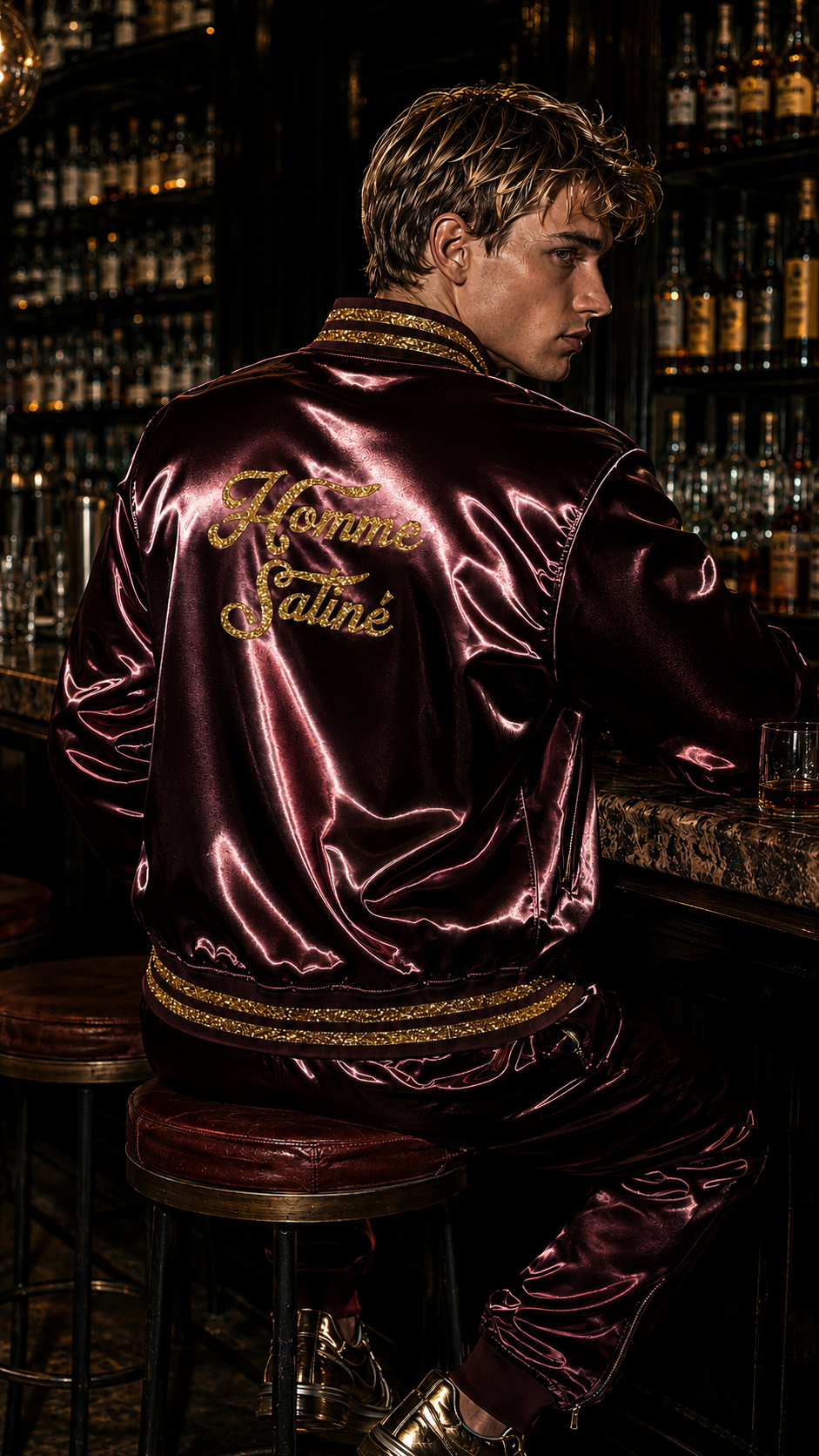
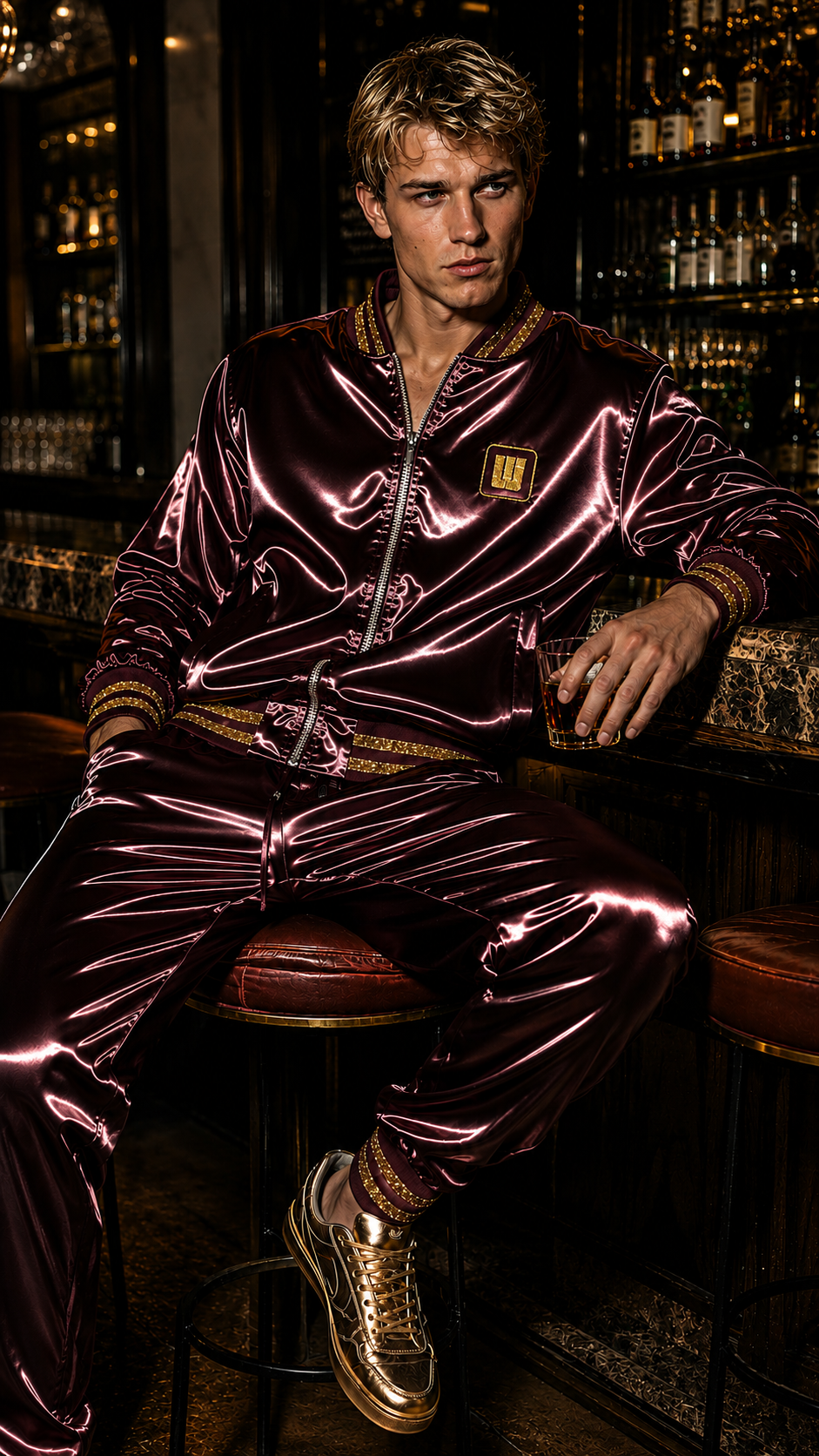
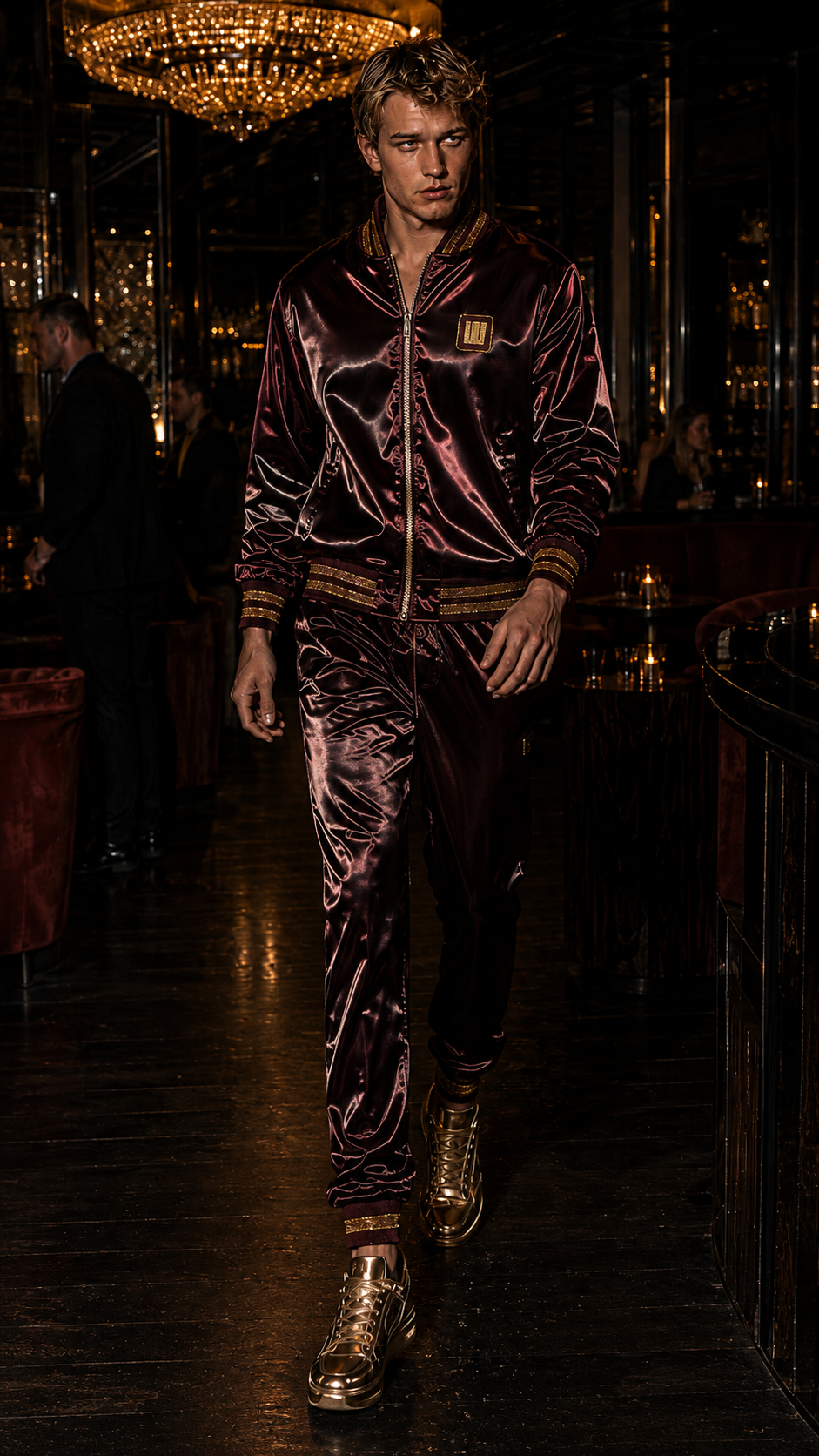
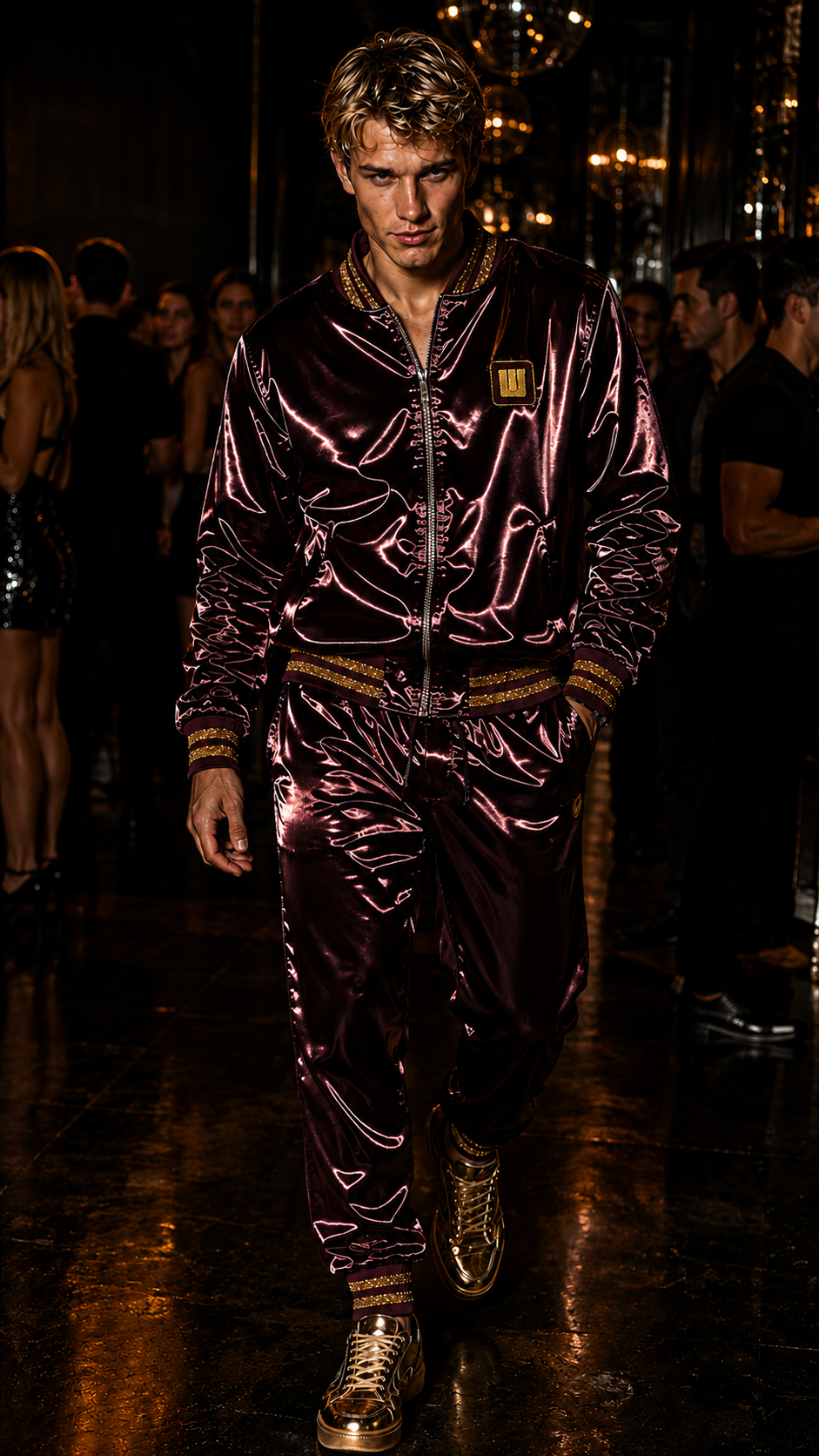
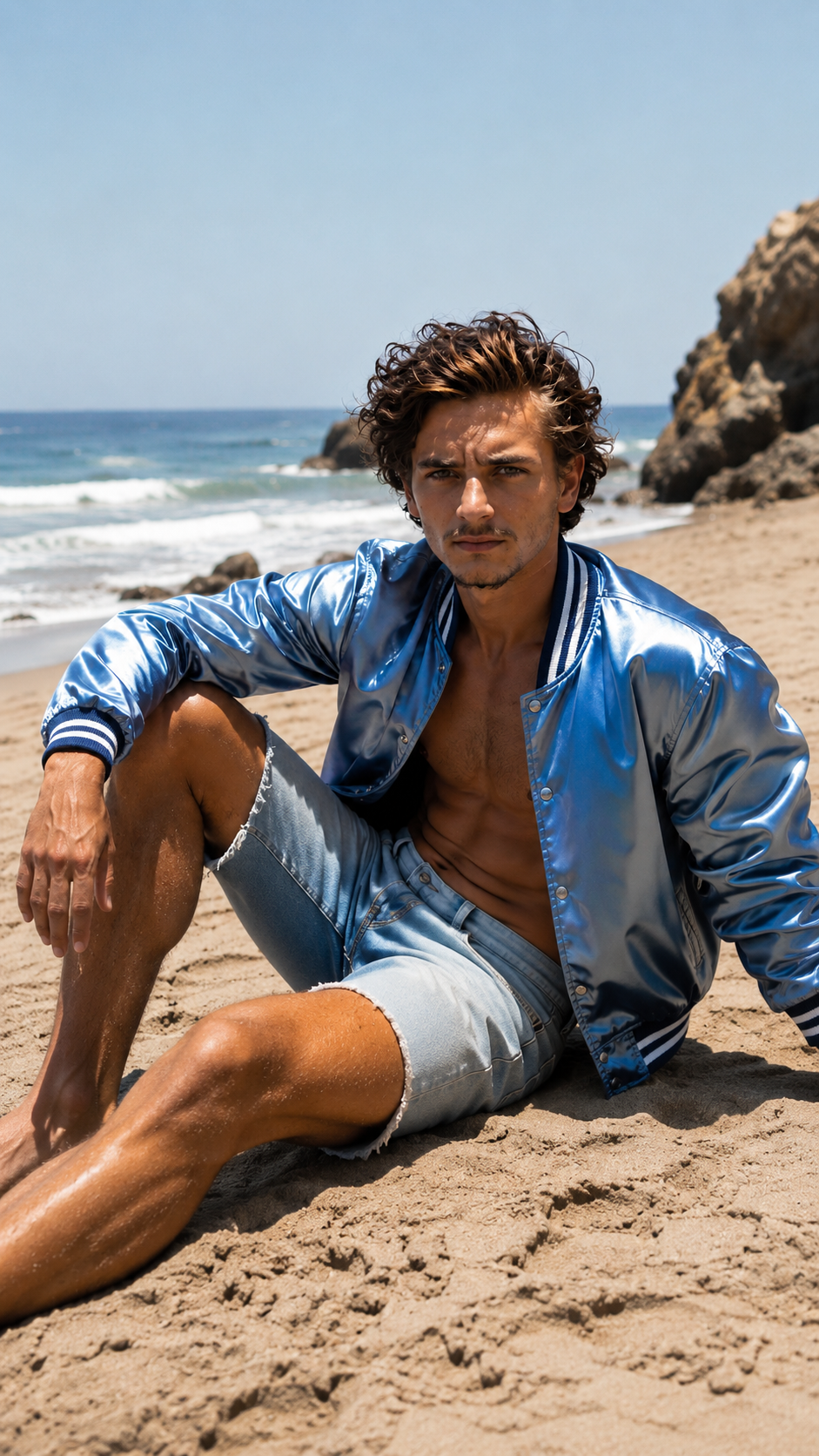
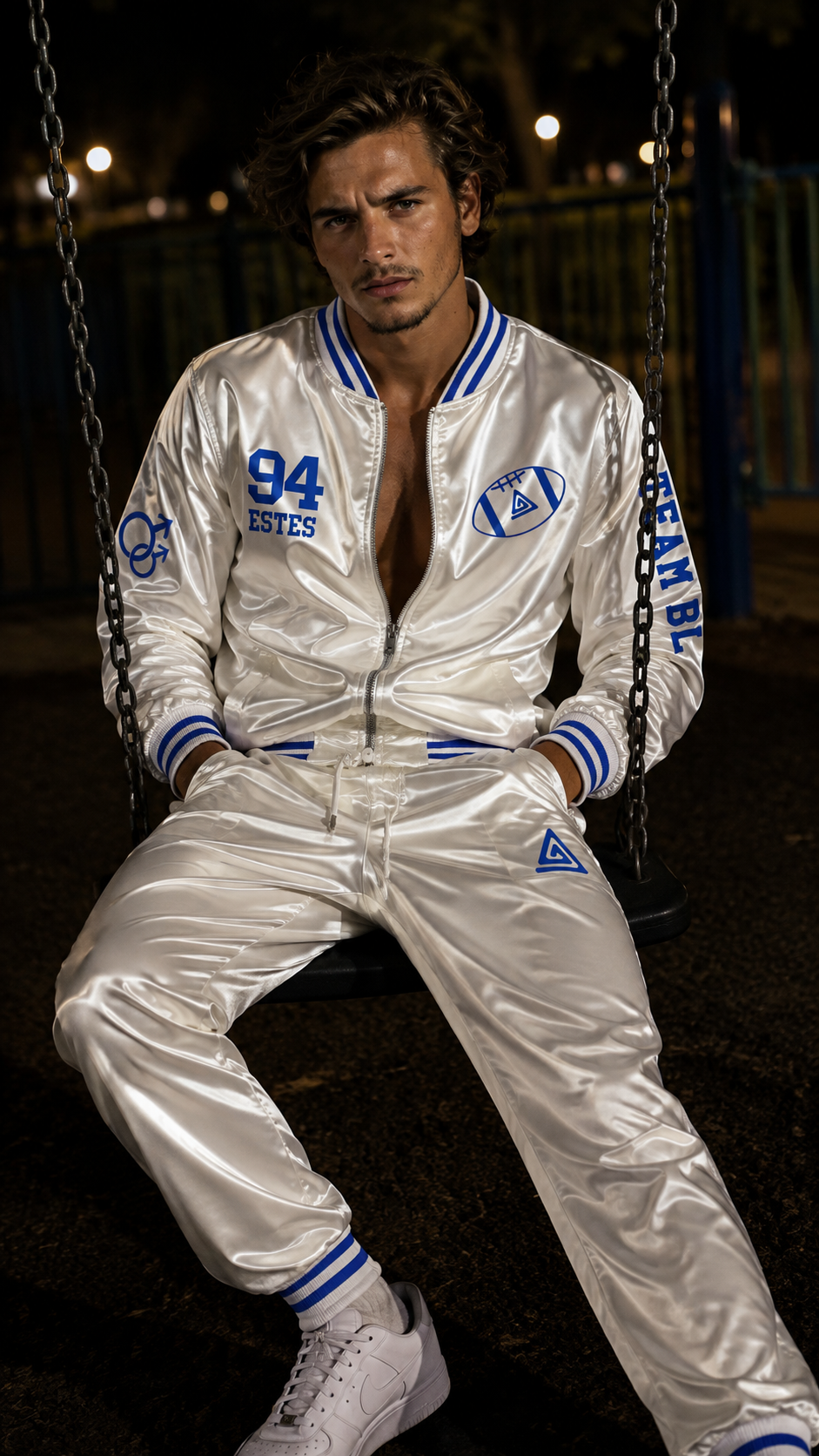
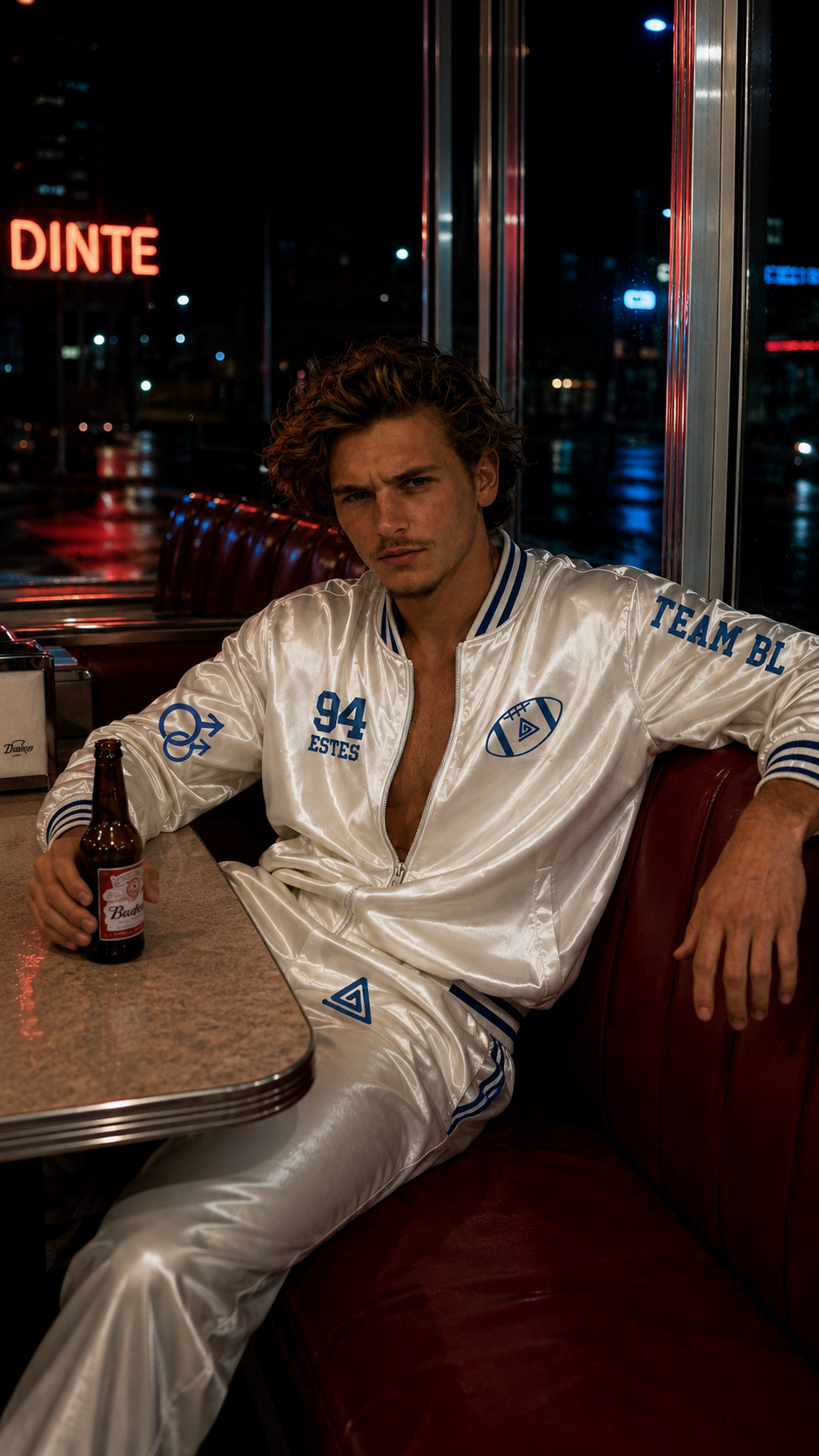
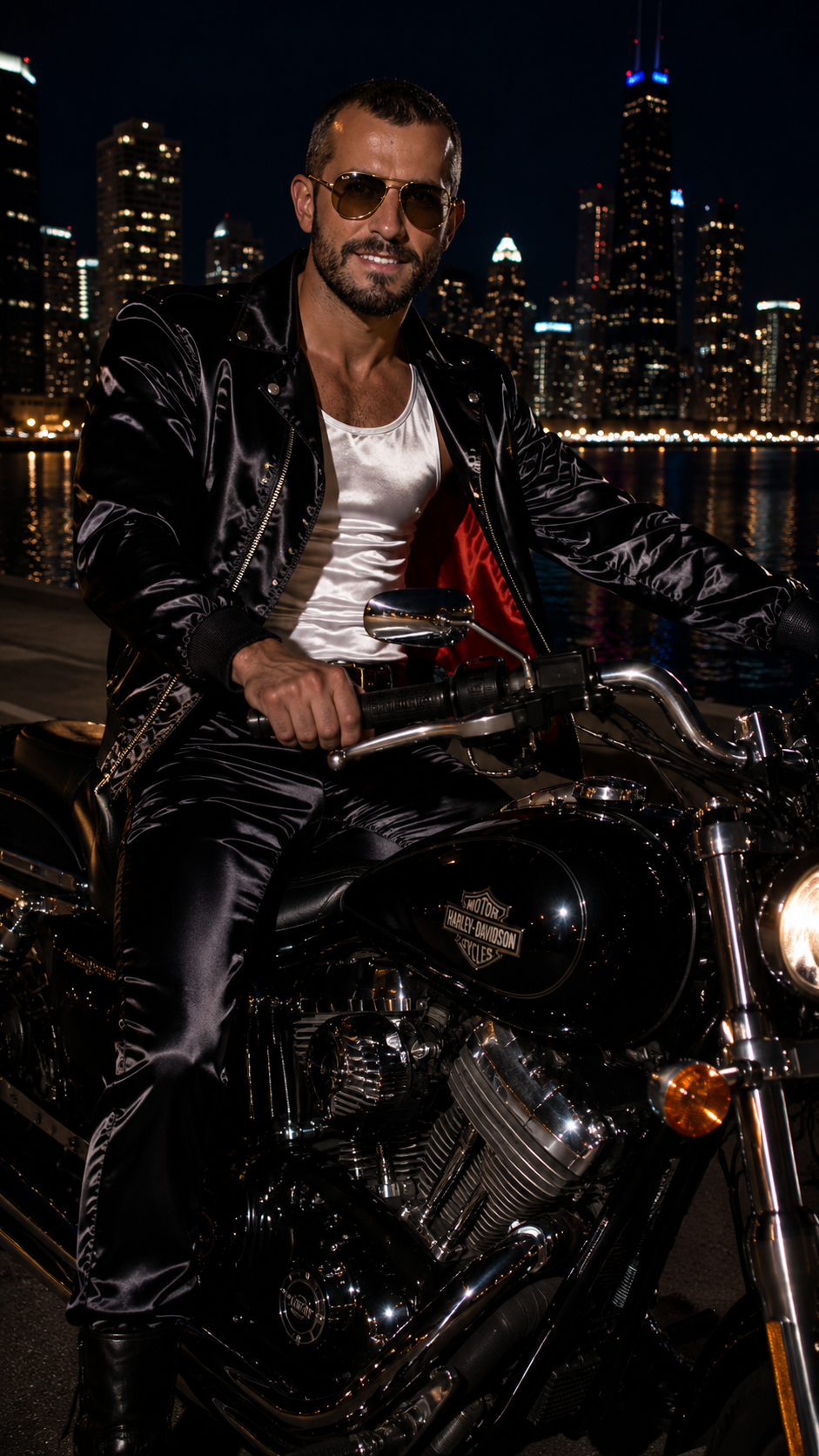
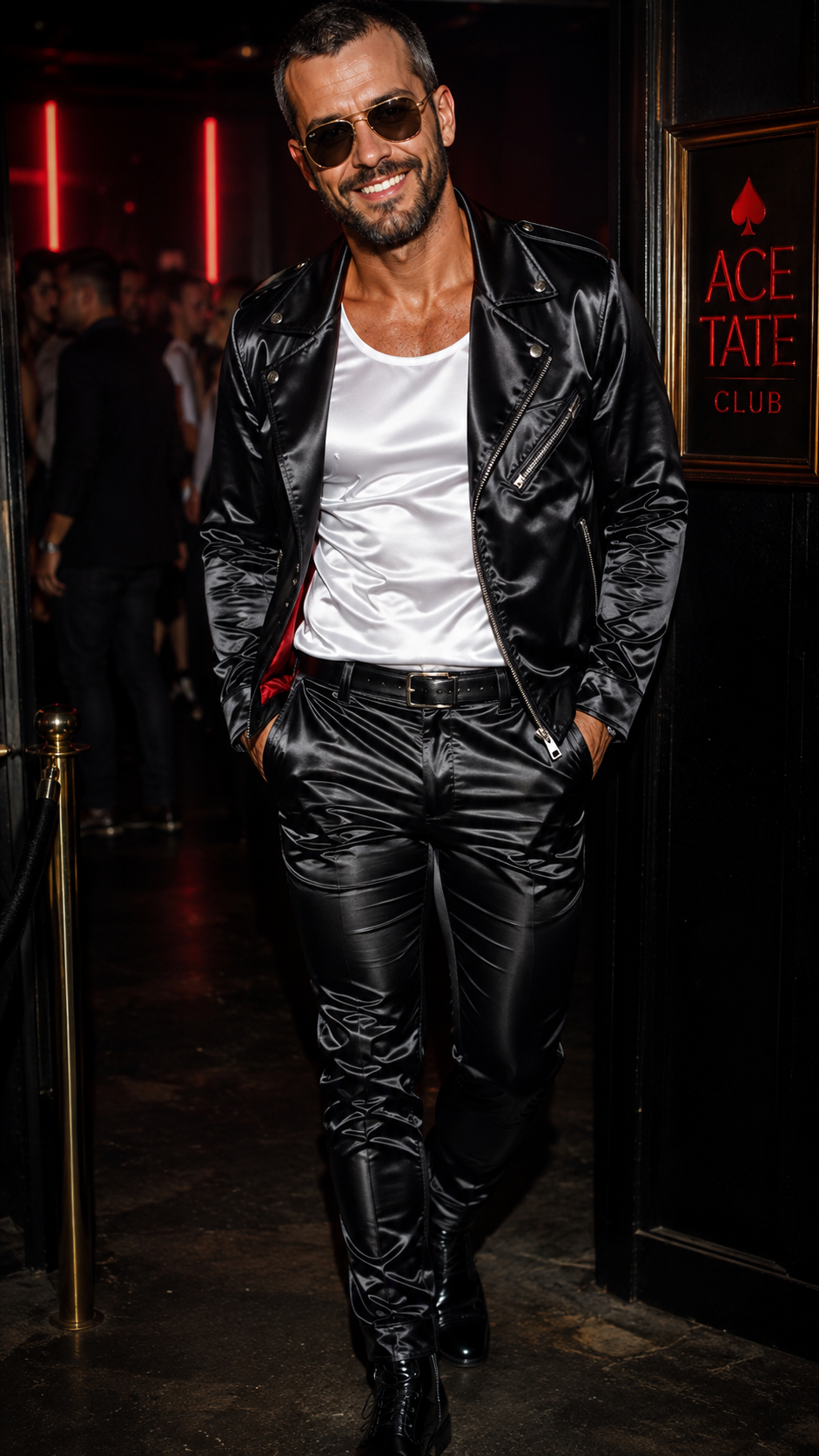
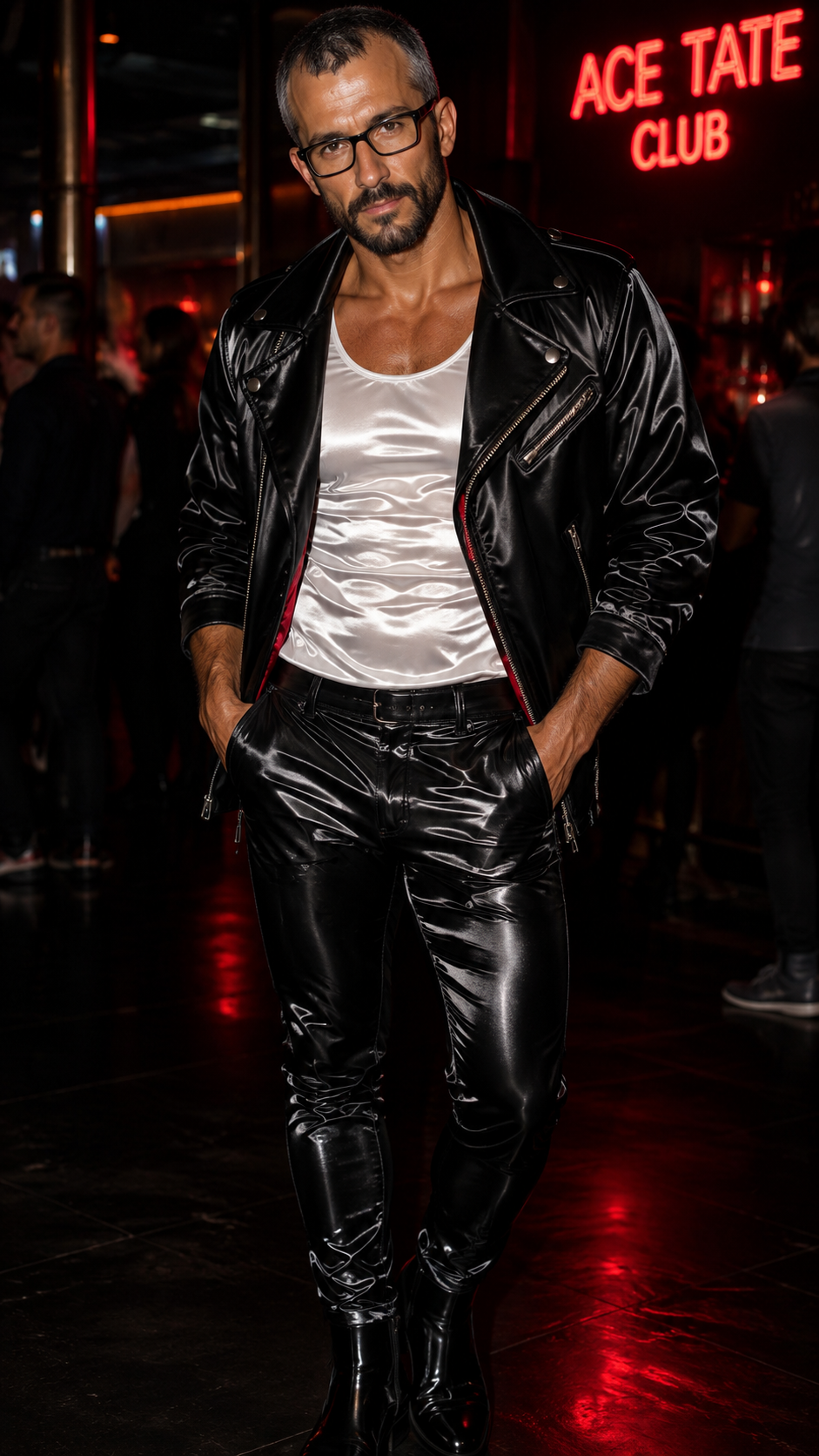
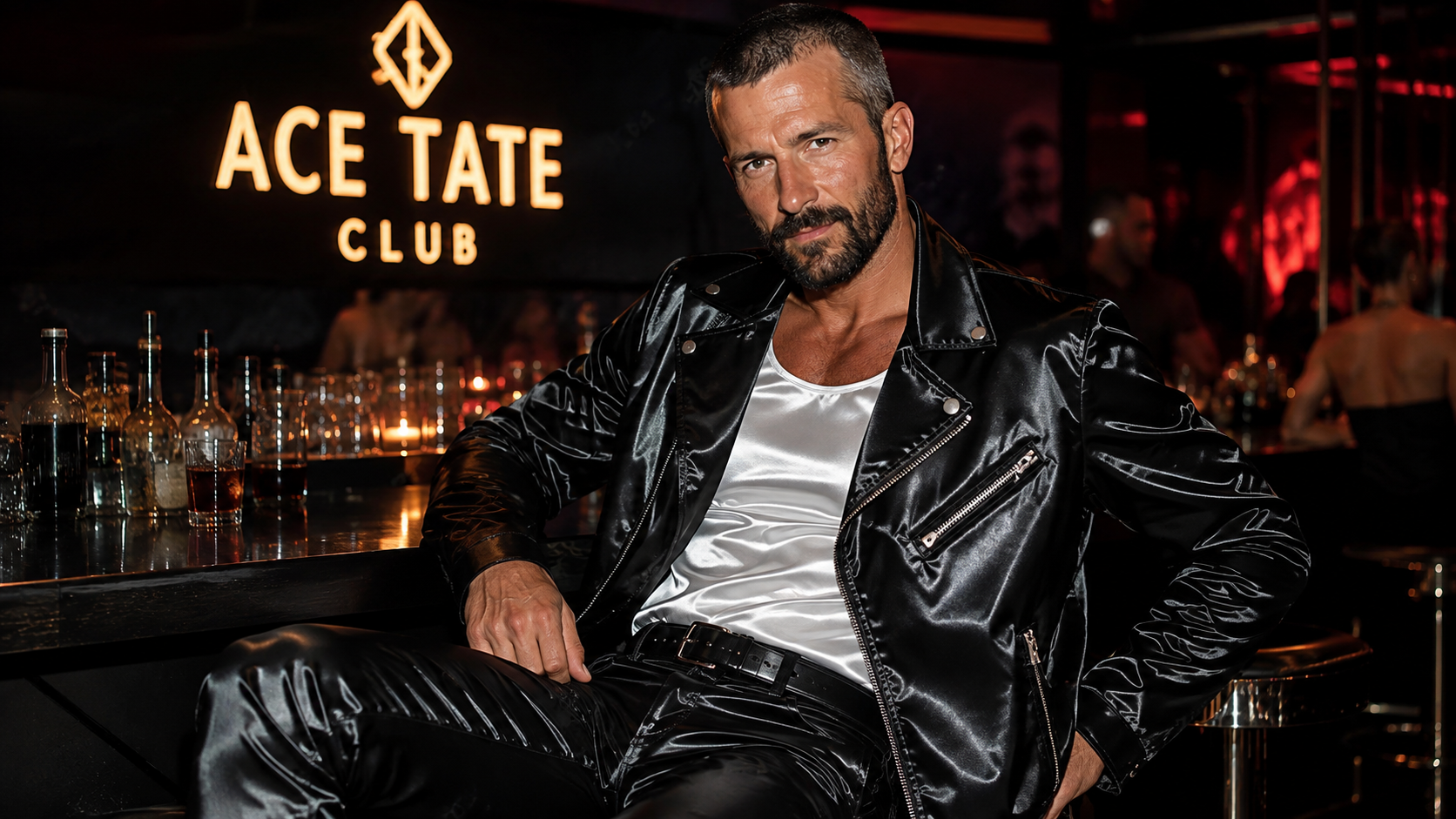
I’ve used murderers and hardened criminals as the Ai models for my latest satin menswear editorial. Why? Because they look better in the clothes than anyone else I could find.
That is the entire brief. Not a metaphor. Not a “commentary.”
A casting decision.
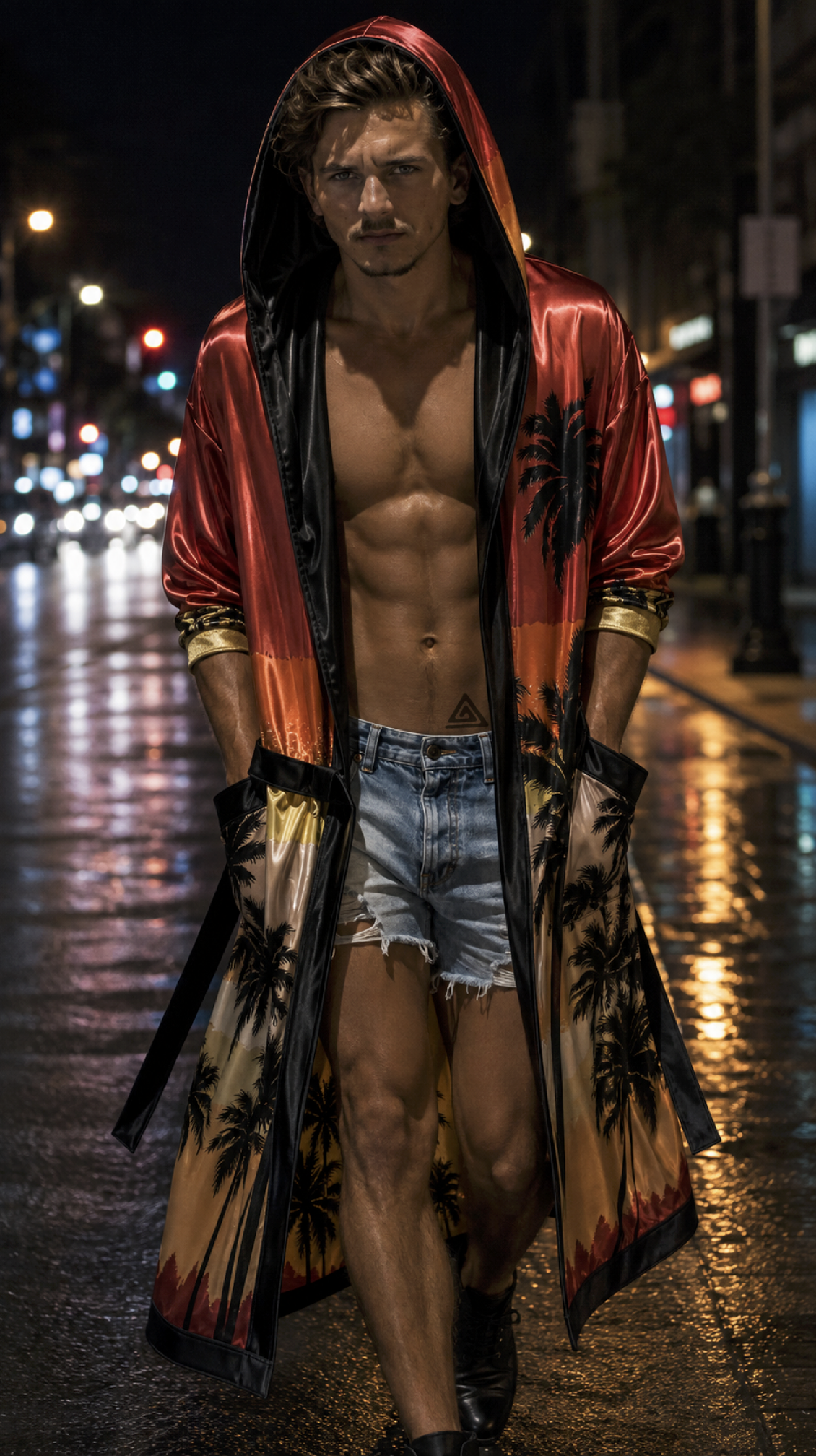
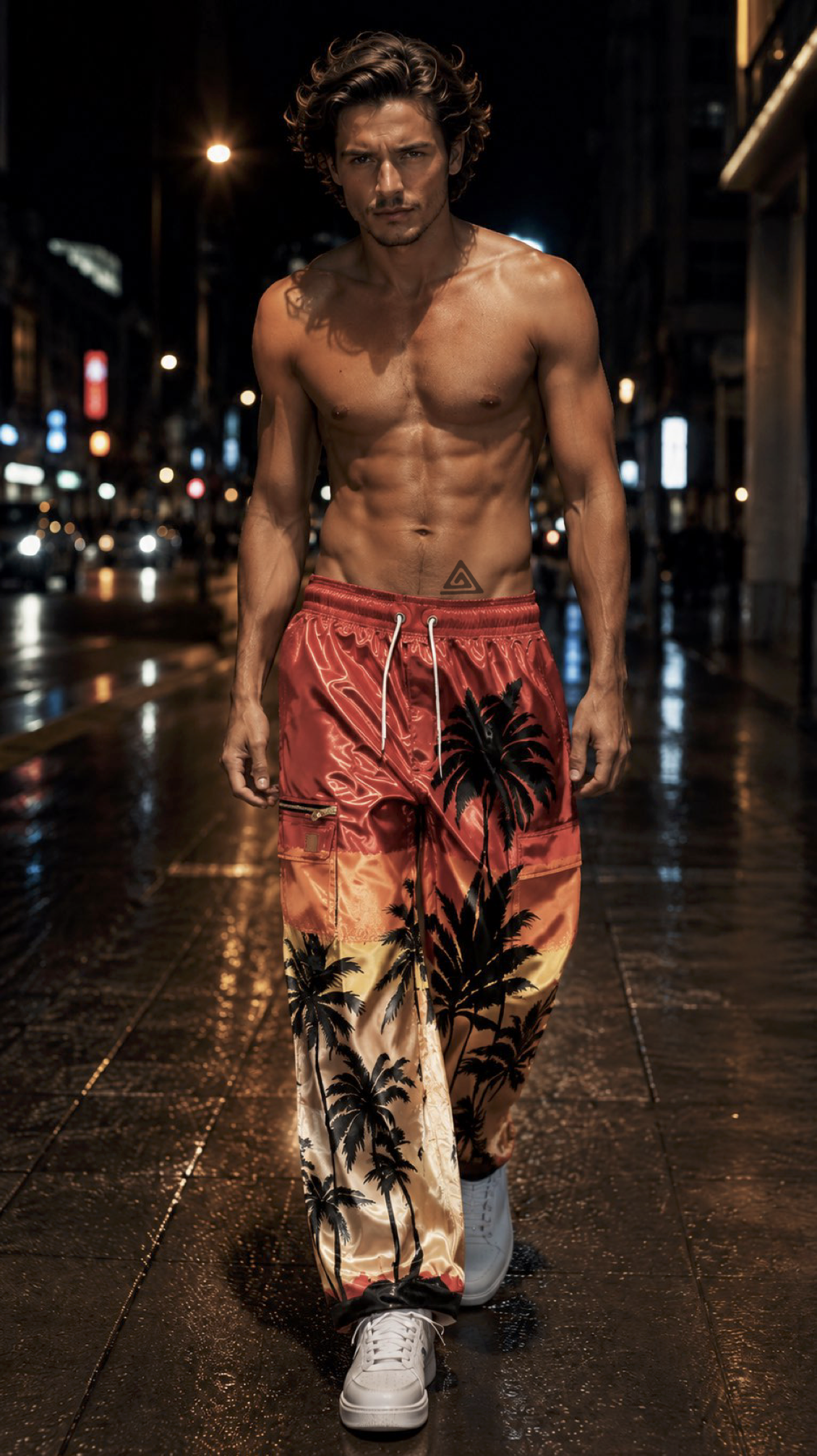
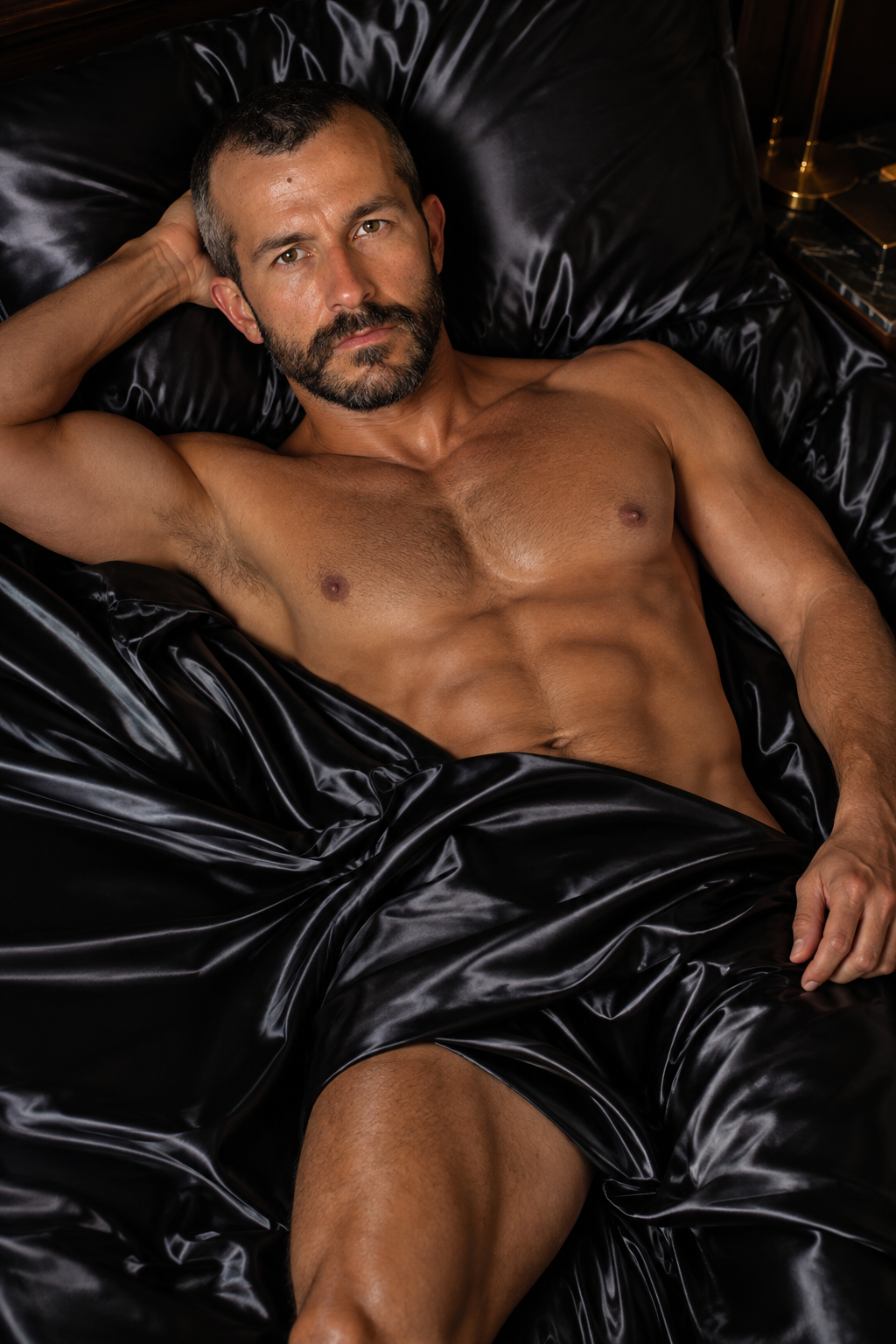
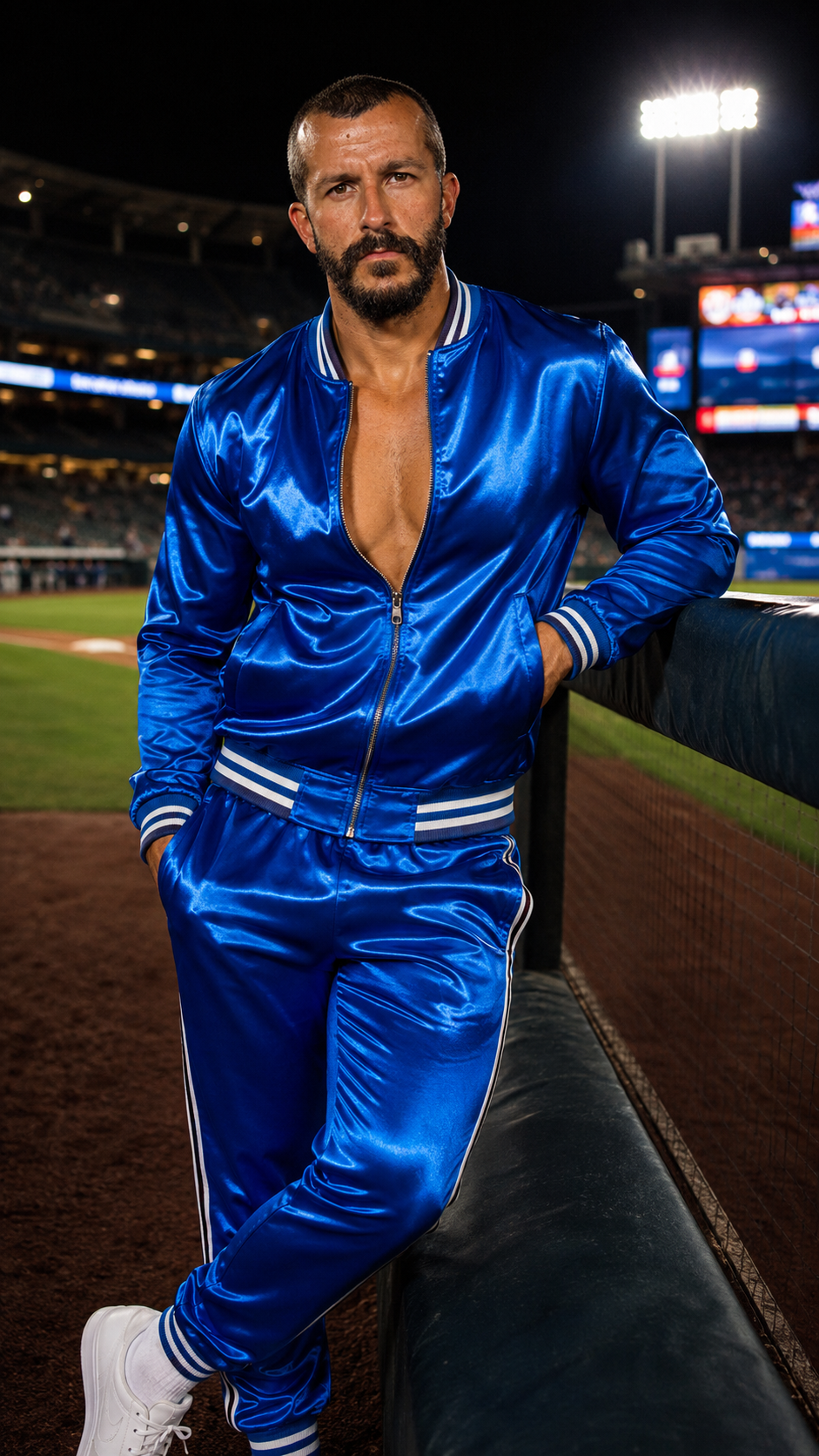
The fabric is liquid: High-shine acetate satin jackets, silk satin shirts that cling then slide, wide-leg satin trousers that pool like spilled mercury, satin-lined satin robes that open with almost no resistance.
Satin is brutally honest about the body. It records muscle, clavicle, the slight softness still left on a twenty-one-year-old jaw. It does not flatter morality. It flatters bone structure.
These particular young men — convicted felons — happen to have the bone structure.
Women notice first and loudest. Men notice second and quieter. The comment sections, the fan edits, the prison letters, the merch, the “I can fix him” posts are not a glitch.
They are the market research.
The Halo Is Not New. The Lighting Is.
People have always romanticized the outlaw when he was photogenic enough.
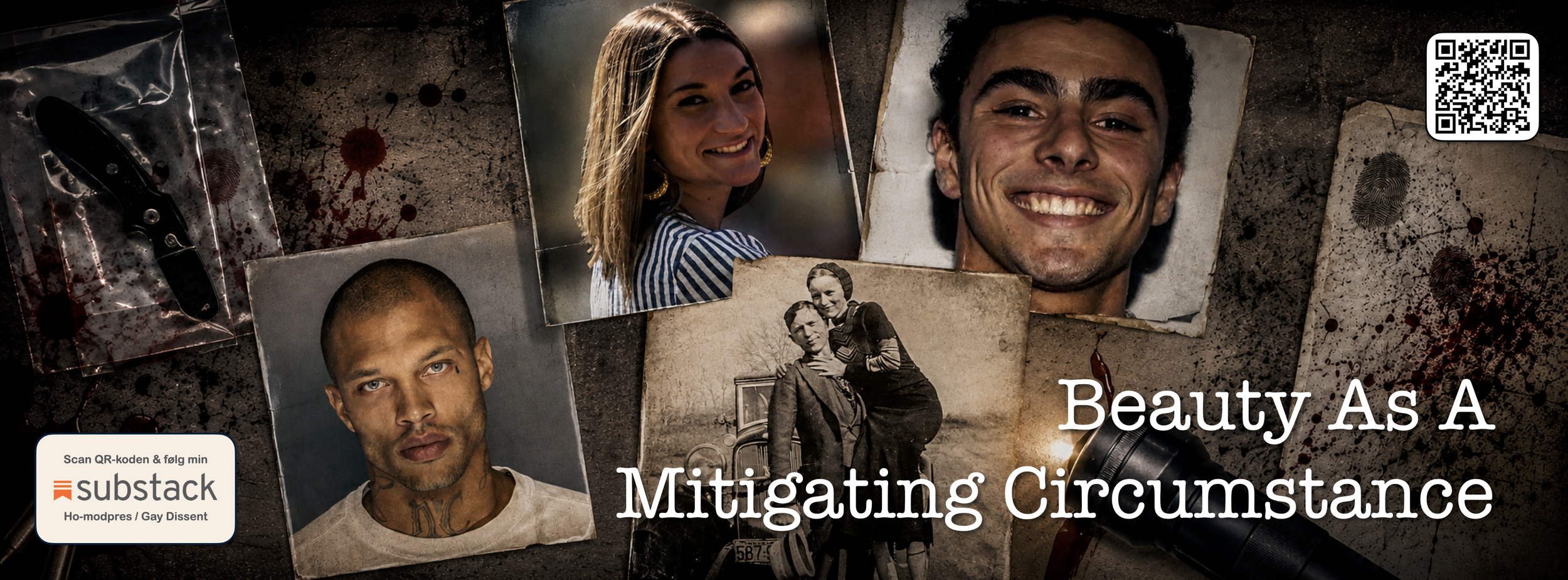
Highwaymen in the eighteenth century became celebrities in print because the broadsides showed them dashing rather than desperate. Jesse James, Billy the Kid, Bonnie and Clyde:
The myth arrived faster than the body count once a good likeness circulated.
Ted Bundy remains the textbook case—courtroom groupies, marriage proposals, the persistent insistence that someone that handsome couldn’t have done that. Luigi Mangione now has his own gallery of women in the gallery. The pattern is as old as Mangione is hot.
What changed is the delivery system.
A mugshot used to sit in a newspaper for a day. Now it is a high-resolution still that can be color-graded, set to a slowed-down Lana Del Rey track, and served to millions before the charges are even read.
Attractiveness triggers the halo effect with grotesquely comic reliability:
The same crime looks “complicated” or “tragic” on a conventionally beautiful face and simply monstrous on an ugly one.
Studies of TikTok content from 2020–2024 found users routinely minimizing violence when the offender was considered cute, transferring desire from the actor playing the killer onto the actual killer, and treating “I can fix him” as both joke and genuine fantasy. Engagement, not mere exposure, predicted higher scores on measures of hybristophilia—the sexual or romantic pull toward those who have committed serious crimes.
It is not only women. Men do it with more plausible deniability—calling it “aesthetics,” “aura,” “he’s just built different.”
The secrecy is part of the charge.
Why Looks Seem to Negate the Crime
They don’t, of course. Not in court, not in the graves, not in any adult moral accounting. They negate it in the only court that currently matters to a lot of people:
The feed.
Several overlapping mechanisms do the work:
Visual primacy. We process faces faster than we process facts. A symmetrical face, good hair, the suggestion of a body that would look expensive in satin, arrives before the indictment. The brain files the image under “desirable” and then has to retrofit the rest.
The forbidden-plus-fixable script. Danger without immediate personal cost plus the ancient story that love (or sex, or attention) can redeem the irredeemable. Satin helps here: it looks like something you take off someone, not something you bury them in.
Parasocial compression. Social media collapses the distance between spectator and subject. You can watch a courtroom clip on loop, screenshot the jawline, write fanfiction, and never smell the prison. The crime becomes lore. The face becomes a character.
Pretty privilege as social solvent. Attractiveness has always bought leniency in everyday life. On the internet it buys narrative control. Luigi Mangione’s case made the mechanism impossible to ignore: The same political grievance plus a face that photographed like a campaign ad produced merch, defense funds, and an entire aesthetic. The politics supplied the excuse. The looks supplied the obsession.
Was it always this superficial?
The impulse is old. The volume and the shamelessness are new. We live inside an attention economy that rewards the most scroll-stopping image and punishes context. True crime became a genre of entertainment at the same moment short-form video made every face a potential thumbnail. Algorithms do not care about victims. They care about watch time. A hot criminal is high-engagement content. An unattractive one is just another defendant.
The “disturbing superficiality” some people diagnose is not a sudden moral collapse so much as the logical endpoint of a culture that already treats politics, trauma, and identity as content. Once you accept that a face can launch a thousand think-pieces, it is only a small additional step to accept that the same face can sell a €1,000 satin shirt.
The Collection Itself
I did not put these men and boys in the clothes to “humanize” them.
I put them in the clothes because the clothes look better on bodies that already carry a charge.
The satin catches the light the same way a camera flash catches a mugshot. The drape does what desire always does: it edits. It leaves the jaw, the neck, the way the fabric sits on the hip, and it leaves the rest off-screen.
If that bothers you, good. Fashion has always been about the gap between what we say we value and what we actually look at. These models simply made the gap visible.
The satin will still feel the same on anyone who can afford it. The faces I chose just happen to prove that, for a statistically significant portion of the audience, beauty is the only apology that ever really works.
It’s the only defence that money can’t buy.









Read my essay about The Halo Effect on my Substack.
